Gold and Jewelry in Contemporary Art: Beyond Traditional Ornamentation
Gold and gemstones have long been associated with adornment and luxury. However, in contemporary art, they have become tools of expression that transcend mere physical beauty, reflecting deeper human, cultural, and socio-political issues. Their value is no longer limited to their shine and rarity—they have evolved into symbolic and critical artistic materials. Below are key ways gold and jewelry are being used in contemporary art:
1. Gold as a Tool for Social and Economic Critique
-
Featured in installations to critique consumerism and capitalism.
-
Highlights the contrast between material opulence and global poverty.
-
Combined with recycled or raw materials to emphasize “meaning” over “price.”
2. Jewelry in Conceptual Art
-
Used as symbols of bodily identity, power, and social class.
-
Challenges traditional beauty standards through bold or deconstructed designs.
-
Transforms jewelry from mere decoration to a “statement” carrying cultural or political messages.
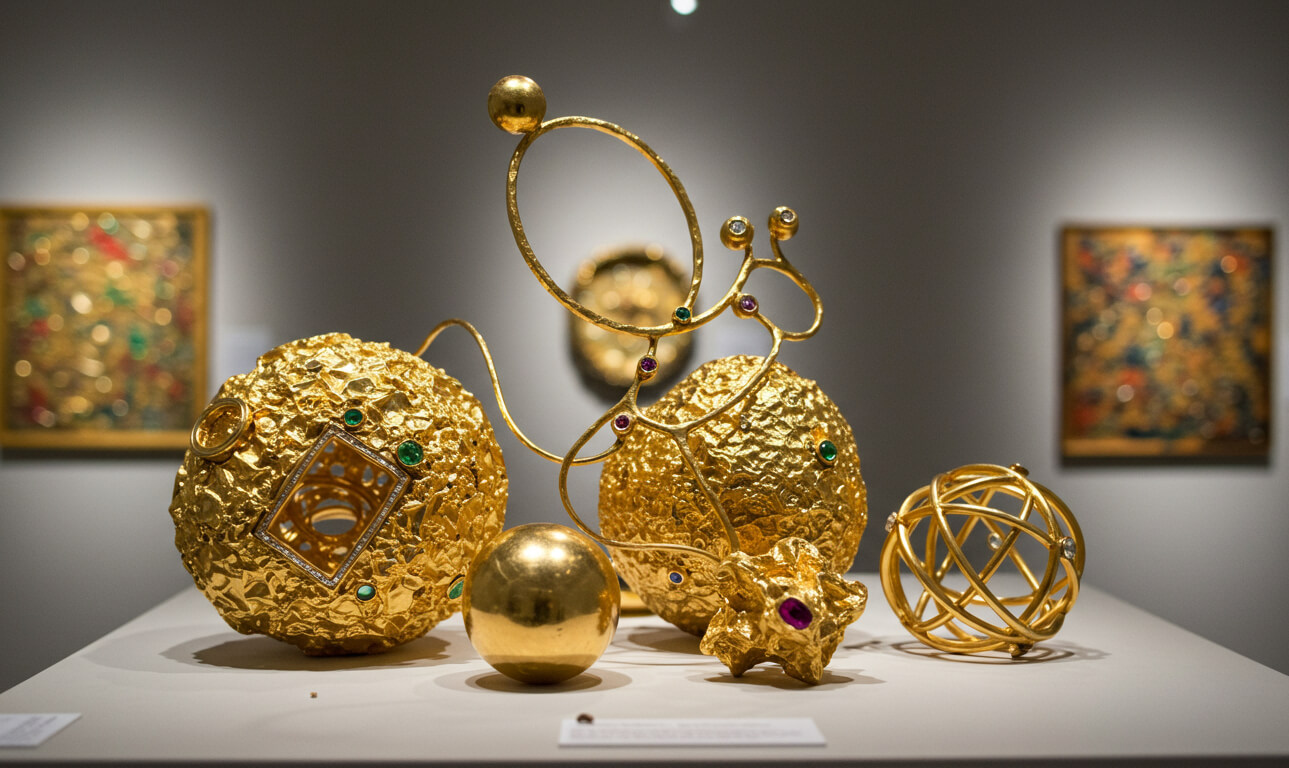
3. Incorporating Gold in Sculpture and Installations
-
Gold is used in modern sculptures for its visual and symbolic impact.
-
Often mixed with natural elements (wood, soil, ash) to create visual contradictions.
-
Reflects the tension between precious materials and their surrounding environments.
4. Critiquing the History of Resource Extraction
-
Gemstones are used to spotlight labor exploitation in mining industries.
-
Raises questions about environmental justice and workers' rights in the Global South.
-
Places jewelry in its political and economic context, rather than just as decorative art.
5. Jewelry Recycling as an Artistic Act
-
Artists repurpose old jewelry into new contemporary artworks.
-
Symbolizes sustainability and reimagining the past through a modern lens.
-
Restoration becomes not only physical but also a message about time and transformation.
Conclusion
Contemporary artists no longer see gold as mere ornamentation. It has become a material that speaks the language of identity, power, consumption, and resistance. It invites us to reflect on the values we attach to objects—and the hidden messages behind their shine.